
NEWS

Investing in Africa Mining INDABA
 MC&A has been active as a legal service provider in the mining industry over the years, mainly in Angola and Mozambique, and has been invited to attend Mining Indaba 2020, one of greatest events related with investing in African mining, taking place in Cape Town.
At Mining Indaba’s first day, optimizing growth and investment in the digitized mining economy as been at the center stage.
Questions such as how should mining companies position themselves to attract millennial investors and how can the mining sector be an engine for tackling the youth challenge and for development across Africa, have been heavily debated.
At the main stage, several speakers discuss how to reconnect the fundamentals of the mining industry with next generation values, how to increase the copper production to boost Africa’s stake in the vital global battery market and how to develop gold exploration and production.
Countries such as Angola organized pavilions, being highly represented in the mining industry through the presence of the public and private major players in the country, namely in the diamonds sector.
It has been a great first of four very promising days, in the presence of notorious speakers, governments and mining companies.
Investing in Africa Mining INDABA, February 3rd to 5th, 2020 in Cape Town, South Africa

Expat – Mozambique improves Oil & Gas immigration regime
Published in furtherafrica.com
The discoveries of natural gas in Rovuma, Pande & Temane, Angoche and Zambeze placed Mozambique in the list of the top 10 world’s largest reserves, being the most sought-after destination by oil & gas investors across the sub-Saharan African region.
These discoveries ended up leading the country in key legal reforms aiming to increase and facilitate investment. Considering this new reality, Decree 2/2014 of December 2nd was approved, establishing a special framework applicable to the Rovuma Basin project. Above all, this regime brings flexibility when it comes to expatriates hiring process.
Benefiting companies and sub-contractors’ expatriates, it allows the entry in Mozambique to be made on the basis of business visas that can be acquired on arrival.
As the Rovuma Decree was yet to be fully implemented, another step has been made very recently, when the Ministry of Labor introduced an online portal for submission and processing of applications for all companies and their approved sub-contractors, since their plan of development is approved. This platform allows exclusively the application of expatriate skillset that is required for Rovuma Basin project.
Such measure enables the reduction of waiting time to process work permits to 3 or 4 working days for short-term jobs or 5 to 7 working days for long-term jobs, while standard processing of such applications has generally been 3 to 4 weeks.
Furthermore, for the recruitment of any expatriate skillset for Rovuma Basin projects, requirements such as equivalence certificate is no longer required. In addition, expatriates with approved work permit through this online portal may get the residence permit upon arrival.
Published by Duarte Marques da Cruz
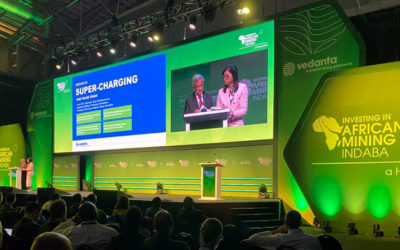
Indaba 2020 – digitalising mining economy and connecting millennial investors
Published in furtherafrica.com
In Cape Town, on the first day of Mining Indaba 2020, optimizing growth and investment in the digitalised mining economy has been at the center stage.
Out of the many subjects in debate, the common thread connecting them seems to revolve around questions such as how should mining companies position themselves to attract millennial investors and how can the mining sector be an engine for tackling the youth in order to further enhance development across Africa.
At the main stage, several speakers discussed about reconnecting the fundamentals of the mining industry with next generation values, how to increase the copper production to boost Africa’s stake in the vital global battery market and how to develop gold exploration and production.Countries such as Angola have set up pavilions, being highly represented in the mining industry through the presence of the public and private major players in the country, namely in the diamonds sector.
It has been a great first of four very promising days, in the presence of notorious speakers, governments and mining companies.
Published by Duarte Marques da Cruz

Duarte Marques da Cruz is partner of the Portuguese law firm MC&A, specialized in international business advisory, with a special focus in Lusophone markets. With extensive experience in the Energy sector (Renewables and Oil & Gas) and in International Taxation, he has supported international companies in major upstream, midstream transactions and projects, including in implementing, exploration and development programs. Duarte has also supported international clients in other areas of practice, namely, Mining, Transport & Logistics, Regulatory Compliance and Mergers & Acquisitions in Mozambique, Angola and Portugal.

Angola’s new foreign exchange policies and transaction prices
Published in furtherafrica.com
The National Bank of Angola passed four Notices, with the purpose of ensuring transparency and stability of the foreign exchange market, protecting consumers of financial goods and services and enhancing the process of normalization of the foreign exchange market.
Notice 11/2019, of November 26th:
- Establishes maximum limits to charges and costs of transactions in foreign currency, that are applied in some operations, and defines the currency of those charges.
- Entered into force on November 26th, 2019.
- The following regulations are to be highlighted:
- The levying of any charges or costs in foreign currency operations, that are not foreseen in this Notice, is not permitted.
- Only charges and costs that are referred in this Notice in foreign currency can be calculated based on such currency; other charges or costs must be demonstrated in price lists and levied in Kwanzas and cannot be indexed to any foreign currency.
- Purchases or payments with credit card will have a maximum charge of 3% per each transaction.
- The sale of notes in foreign currency will have a maximum charge of 2 Euros per each transaction.
- The sale of foreign currency will have a maximum charge of 0,25% per each transaction.
Notice 12/2019, of December 2nd:
- Establishes rules and proceedings that must be observed in any foreign exchange operations by natural persons, namely, operations performed by foreign exchange residents, and non-foreign exchange residents under a work visa.
- Entered into force on January 3rd, 2020.
The following regulations are highlighted: - Private operations performed in one civil year by foreign exchange residents cannot exceed the amount of USD 120.000,00, when ordered by the same person, regardless of the payment instrument used.
- The limit above mentioned does not apply to:
- Payments regarding health, education and accommodation expenses, when paid directly to the provider of those services.
- Transfer of amounts accumulated by non-foreign exchange residents, during their stay in Angola, after their stay has ceased.
Non foreign exchange residents may purchase foreign currency and transfer it to outside of Angolan territory, the amounts legally earned due to their employment contract, when deposited by the foreign exchange resident contracting entity, in a bank account held by a non-foreign exchange resident.
Notice 13/2019, of December 2nd:
- Establishes the proceedings that must be observed in operations for sale of foreign currency, in relation to the Oil & Gas sector, performed by the National Concessionaire and Angolan/foreign investor companies, regardless of their status, to liquidate goods and services supplied by foreign exchange residents.
- Entered into force on January 2nd, 2020.
- The following regulations are highlighted:
- Companies must sell foreign currency to liquidate goods and services provided by foreign exchange residents, to Commercial Banks.
- The exchange rate to be applied in operations for sale of foreign currency, is freely agreed by the parties.
Notice 14/2019, of December 2nd:
- Establishes the limits of Commercial Banks’ foreign exchange global position and its calculation basis.
- Entered into force on January 2nd, 2020.
- The following regulations are highlighted:
- Banks must daily observe a foreign exchange global position that does not exceed 2,5% of their own regulatory funds.
- The foreign exchange position is defined in USD.
- Banks that register a foreign exchange position that does not comply with the limits established in this Notice will be unable to sell foreign currency to their clients, until their foreign exchange global position complies with those limits.
Published by Luís Trigo Carrazedo

Insight: Local content law in Mozambique
Published in furtherafrica.com
The Mozambican economy has been growing considerably on the last years, particularly the mining industry. As such, and to promote Mozambican economic agents, the Mozambican Parliament intends to foster the production and use of Mozambican goods and services with the consequent growth and evolution of Mozambican companies and improvement of the population`s living conditions, through the creation of a new Local Content Law (which is yet to be passed).
Local Content is the portion of local production factors which were used in producing goods or providing services, as well as the participation of Mozambican citizens in the share capital of companies. Local Content Goods are goods with a minimum of 10% of Local Content; for each sector, dynamic minimum percentages may be set within a time frame of 7 to 10 years. Local Content Services are services provided by Mozambican citizens, or legal entities incorporated under Mozambican Law, that operate in Mozambican territory.
Local Participation
Local Participation is the subscription, up to 15%, of the share capital of:
- Enterprises, through companies, to be created, between foreign and Mozambican citizens or legal entities.
- Joint Ventures, to be created between Mozambican citizens or legal entities and the companies contracted by the concessionaires.
The minimum percentage of Local Participation is not transferable to foreign persons or companies.
Monitoring and Certification
The monitoring and management of the LCDL will be carried out by a public entity to be created. This public entity would likewise be responsible for keeping a data base on the Certified Mozambican suppliers. Goods and services of Local Content are subject to certification, to be issued by a public entity. The natural persons or companies will be deemed as “Local suppliers” by presenting the correspondent certificate.
This public entity is also responsible for establishing the percentage of Local Content, in accordance with the criteria and procedures to be set by the Mozambican Government.
Contracts
Goods or services to be purchased shall present the correspondent Local Content Certificate. The purchasing entity shall give preference to those goods or services with the highest local production factors. Suppliers may form associations to provide goods or services, provided that the requirements set by the purchasing entity are met.
Mozambican citizens or companies that intend to subcontract other entities to provide for goods or services, shall present a request for that effect. The subcontractor shall also be a certified supplier and is subject to the provision of the LCDL and its regulations.
Import of goods and services
In the event the goods or services required by the purchasing entity are not available in Mozambican territory, such goods or services may be purchased in foreign territory, provided that previous authorization is granted.
Local Content Plan
Enterprises that operate in Mozambican territory shall present to the relevant authorities, on an annual basis, a Local Content Plan, with the actions and strategies to be developed in the following year. Furthermore, contracting enterprises shall also elaborate a Long-Term Plan for a period of 5 years.
The enterprises shall submit, on an annual basis, to the relevant authorities, a report with a detailed evaluation of the performance of the Local Content Plan.
Transfer of Technology Plan
The foreign natural persons or companies shall also elaborate a plan for transfer of technology, experience, technical knowledge and skills to the Mozambican natural persons or companies to which they are associated with.
Sanctions
The violation of the rules of the LCDL may be sanctioned by the application of fines or suspension of the supplier for a period of 2 years. Subcontractors are jointly liable for the lack of compliance with the LCDL.
Other legal dispositions currently in force in Mozambique
Although the LCDL is not currently in effect in Mozambique, there are already a number of legal dispositions in force with local content provisions, especially in the Petroleum and Mining sectors.
Petroleum Sector
The Mozambican Petroleum Law and the Mega Project Law have several local content dispositions, such as:
- Mandatory registration of oil and gas companies, on the Mozambique Stock Exchange.
- When the public interest so requires, holders of oil or gas exploration rights shall give preference to the Mozambican Government in the acquisition of petroleum produced in the concession area.
- Concessionaires are required to obtain Mozambican participation in their share capital, in an amount between 5% to 20%, via the stock exchange and on commercial terms.
Mining Sector
The mining sector is regulated by the Mining Law and the Mining Law Regulation. Both these diplomas mention some local content dispositions, such as:
- The acquisition of goods and services in the minimum amount of 15,000,000 MT (which roughly corresponds to 900,000.00 USD), must be executed through public tender.
- Titleholders and contractors must give preference to Mozambican goods and services whenever available, and when its price is no more than 10% higher to the prices of the imported goods available.
- Concessionaires are required to obtain Mozambican participation in their share capital, in an amount between 5% to 20%, via the stock exchange and on commercial terms.
Published by Duarte Marques da Cruz
Duarte Marques da Cruz is partner of the Portuguese law firm MC&A, specialized in international business advisory, with a special focus in Lusophone markets. With extensive experience in the Energy sector (Renewables and Oil & Gas) and in International Taxation, he has supported international companies in major upstream, midstream transactions and projects, including in implementing, exploration and development programs. Duarte has also supported international clients in other areas of practice, namely, Mining, Transport & Logistics, Regulatory Compliance and Mergers & Acquisitions in Mozambique, Angola and Portugal.

GBF Africa 2019
 MC&A and Carrazedo have been invited to Global Business Forum (GBF) – Africa, taking place in Dubai. GBF Africa encourages international revenue flows into Africa by engaging in leading decision-makers on the global investment scene. The Forum involved prominent African stakeholders to engage in a dialogue at the highest level of implementation, advising on key strategic directives related to Africa’s economic outlook. Business confidence is returning to Africa. Impressive entrepreneurs have sprung up across the continent, changing the reality on the ground. Forward-thinking policy-makers are implementing solutions to problems that have hindered progress for decades. Both business and government leaders are leveraging digital technologies and working across borders to achieve connectivity and scale. With the right support, Africa has the potential to open a new era of growth and prosperity.