NEWS

Angola approves new rules for the definition and modification of Crude and Natural Gas Products prices
Published in furtherafrica.com
Entered into force on December 16th, the Joint Executive Decree no. 331/20, which approved new rules and proceedings concerning the definition and modification of the prices of Crude and Natural Gas Products.
The importance of this new regulation relates with the natural variation of Crude prices on the international markets and the regular revisions of the exchange rate, which have impact on production and/or importation costs, being necessary to periodically adjust the prices of this type of products.
This legal regime applies to the refinement of Crude and import, logistics, distribution and trading of Crude and Natural Gas Products, except fuel, bitumen and lubricants.
The Executive Decree under analysis maintained the Fixed Prices Regime for Kerosene and Liquefied Petroleum Gas, and the Monitored Prices Regime for Gasoline and Diesel.
For the establishment of prices regarding Crude and Natural Gas Products which are not comprised in other regimes, were defined elements that may influence those prices. Among these elements are the shipping to Angola based on the Worldscale for oil products, maritime insurance, customs charges, harbor expenses, warehousing, transport costs, taxes, and profit of each element of the chain of production and supply. The referred elements may be modified by the Crude Products Regulator Institute (“Regulator Institute”).
Maximum costs and profit margins will be published annually in the Newspaper with widest circulation in Angola, by the Regulator Institute, after audition with the Sector’s Companies.
Monthly, the Regulator Institute will update the Reference Prices of Crude and Natural Gas Products, after consulting Sector’s Companies, publishing the price table in the Newspaper with widest circulation in Angola, after homologation by the Finance Minister.
The Regulator Institute will be the entity who supervises and inspects the sale prices of the affected products and may initiate transgression procedures and apply fines and other sanctions to the infringing party.
The infringement of the new legislation is sanctionable with fines from 1 to 5 per cent of the transgressor annual revenue, depending on the culpability and transgression severity. The ancillary sanctions that may be applicable are the suspension and revocation of the transgressor’s activity license.
Considering the actual level of competition in the affected sectors, the intention of the legislator is to grant a better legal framework for these operations, with objective and well-known rules and proceedings which allow to review prices through a flexible adjustment mechanism, according with the variation of the main factors that have influence in the costs of production/importation, permitting greater efficiency on the Oil & Gas and by-products market, as well as the setting of a more effective actualization system, inspired by the best international practices.
Article by Marco Correia Gadanha

Marco Correia Gadanha is a partner of the Portuguese law office MC&A. He is specialized in legal advice to international transactions. Marco has extensive experience of legal practice in Portugal and in the Portuguese-speaking African countries. Since 2008, he has practiced mainly in the areas of labor and litigation, assisting national and international clients in these and other matters, namely corporate law, especially in Portugal, Angola and Mozambique. He graduated at the University of Coimbra in 2005 and he holds post-graduations in Labor and Angolan Law.
AfDB approves €400M Lusophone Compact Guarantee Program
Published in furtherafrica.com
The African Development Bank (AfDB) approved a €400M ‘Lusophone Compact Guarantee Program’ for the African Portuguese-speaking countries, with the purpose of boosting the economy through the development of the private sector.
In recent years, the African Development Bank (AfDB) has been an important encourager of the economies of African countries. The AfDB aims to support the economic development and social progress, giving a contribution in the fight for the poverty reduction in the region.
For the pursuing of these goals, the Bank mobilizes and allocates resources for investment in the region and provides policy advice and technical assistance to support development efforts.
This program offers a boost to business development initiatives for bank’s non-sovereign portfolio in Angola, Mozambique, Guinea Bissau, Cape Verde, Equatorial Guinea and São Tomé and Principe between 2021 and 2025.
The guarantor of the program will be the Portuguese Government, being the €400M being already foreseen in the State Budget for 2020. The amount will be for the exclusive use of the Bank and allows individual projects to be covered until the total project maturity, which can be up to 15 years, and up to a maximum of 85% of the total loan amount, according to predetermined eligibility criteria.
The special importance of this program has been underlined by several sectors and officials, being an important way to contribute to the re-establishment of the economies after the COVID-19 pandemic, granting means for the wealth creation within the private sector, increasing the employment rate and diminishing poverty and precarious situations.
Article by Duarte Marques da Cruz

Duarte Marques da Cruz is partner of the Portuguese law firm MC&A, specialized in international business advisory, with a special focus in Lusophone markets. With extensive experience in the Energy sector (Renewables and Oil & Gas) and in International Taxation, he has supported international companies in major upstream, midstream transactions and projects, including in implementing, exploration and development programs. Duarte has also supported international clients in other areas of practice, namely, Mining, Transport & Logistics, Regulatory Compliance and Mergers & Acquisitions in Mozambique, Angola and Portugal.

Portugal amends the Law regarding the assignment of Employees

Article MC&A in Tax 2020 Expert Guide
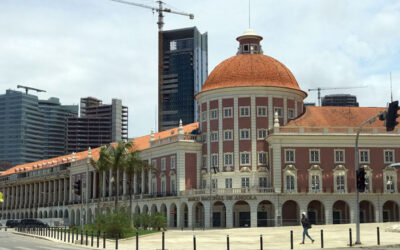
Draft Law reinforces the powers of the Angolan National Bank
Published in furtherafrica.com
The National Bank of Angola sent a Draft Law to the Angolan Parliament, proposing the strengthening of its powers of financial regulation and monitoring over financial and non-financial institutions.
Between the entities comprehended by the new proposed powers are banks, financial institutions, members of the corporate bodies of financial institutions and legal persons who, directly or indirectly, have a qualified share of a financial entity.
According with the Governor of the National Bank of Angola, José Massano, on the legislation in force, the National Bank has already some powers, however, with these amendments, the regulatory entity will have a wider range of monitorization and will be more efficient. The Governor also stated that the final purpose is the establishment of a financial system harmonized with the best international practices.
Allied to the reinforcement of attributions, the National Bank of Angola also proposed to monitor other entities, which would be part of the monitorization system, as mutual agricultural credit banks and institutions which are instrumental/auxiliary to the financial system, as financial mediators, certified accountants, and external auditors.
On other note, was approved by the Angolan Parliament (but is not yet in force), the constitution of the Council of Supervisors of the Financial System. This entity will be chaired by the Governor of the National Bank of Angola and will replace the Financial Stability National Council.
The creation of this new entity has, as purpose, to achieve the stabilization and consolidation of the financial system, permitting greater coordination between the supervisory entities of the different sectors.
Article by Duarte Marques da Cruz
Duarte Marques da Cruz is partner of the Portuguese law firm MC&A, specialized in international business advisory, with a special focus in Lusophone markets. With extensive experience in the Energy sector (Renewables and Oil & Gas) and in International Taxation, he has supported international companies in major upstream, midstream transactions and projects, including in implementing, exploration and development programs. Duarte has also supported international clients in other areas of practice, namely, Mining, Transport & Logistics, Regulatory Compliance and Mergers & Acquisitions in Mozambique, Angola and Portugal.