
NOTÍCIAS

Angola approves an Excise Duty Law
Published in furtherafrica.com
By means of Law no. 16/21, of 21 July, Angola approved of a new Excise Duty Law, that will enter into force on 20 August 2021.
The creation of the excise duty represents an important instrument of social policy aimed at the reasoning and orientation of behaviors related to the exacerbated consumption of goods harmful to public health, superfluous and luxurious, considered non-essential for subsistence.
According to the law’s preamble, it tackles the need to respond to the economic difficulties faced by the national beverage production industry due to the exchange rate devaluation and the reduction in the buying power of national companies and families.
The excise duty will be charged on national and imported goods, such as:
• Alcohol (15%)
• Carbonated and alcoholic drinks (3% to 8%)
• Tobacco and manufactured substitutes (25%)
• Fireworks (19%)
• Jewelry (15%)
• Motor vehicles, including cars, buses, planes, boats (5% to 20%)
• Firearms (50%)
• Paintings, drawings, and pastels (5%)
• Petroleum products, including petrol and diesel (2% to 5%)
The excise duty will be imposed on taxable persons that produce or import the goods that introduce the goods in the Angolan market, being the burden of the tax passed to the consumer.
Among others, the following goods and persons are exempt from excise duty:
• Exported goods
• Goods imported by diplomatic and consular representations (subject to reciprocity) and international organizations
• Raw materials for the national industry duly certified by the Ministry
• Goods intended for laboratory and scientific research purposes
• Electric cars
The taxable persons must affix an official seal on drinks, tobacco, and manufactured substitutes and must have an automatic system certified by the Tax Authorities for counting and measuring the goods.
Tax assessment and payment of the excise duty must be carried out by the taxable persons monthly, by filing an electronic tax return until the last day of each month.
The lack or delay in filing the electronic tax return will be sanctioned with a fine equivalent to AKZ 300,000.00.
The non-affixing of the aforementioned official seal will be sanctioned with a tax increase of 25%.
Article by Duarte Marques da Cruz

Duarte Marques da Cruz is partner of the Portuguese law firm MC&A, specialized in international business advisory, with a special focus in Lusophone markets. With extensive experience in the Energy sector (Renewables and Oil & Gas) and in International Taxation, he has supported international companies in major upstream, midstream transactions and projects, including in implementing, exploration and development programs. Duarte has also supported international clients in other areas of practice, namely, Mining, Transport & Logistics, Regulatory Compliance and Mergers & Acquisitions in Mozambique, Angola and Portugal.

Parceria na América Latina com o escritório Urbano Vitalino Advogados
A MC&A reforçou a sua rede de parceiros internacionais com uma parceria na América Latina, com o escritório Urbano Vitalino Advogados. Com mais de 80 anos de experiência e reconhecido nacional e internacionalmente pela área de direito empresarial, a Urbano Vitalino Advogados conta com uma equipa de mais de 950 profissionais altamente especializados na advocacia empresarial, estando presente na América Latina, nos Estados Unidos, Espanha e Angola.
Damos as boas-vindas as nossos novos Colegas!
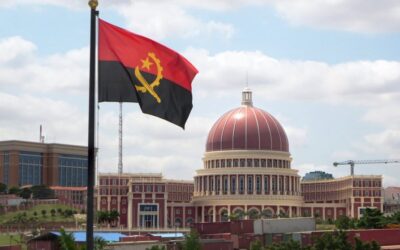
Angola – new project for the simplification of Public Administration proceedings
Published in furtherafrica.com
On June 21, the project implemented by the Angolan Government through Presidential Decree no. 161/21, to simplify the proceedings of the public administration (“Projecto Simplifica”), entered into force.
With this new framework, the Angolan Government proceeds with its intent of reforming the State and its proceedings, modernizing and imposing less bureaucracy, simplifying, integrating, and optimizing administrative proceedings, with benefits to its citizens, and namely to the companies and investors.
The measures are foreseen in the Simplification Project and cover many of the Angolan economy’s most important sectors, including Oil & Gas, Electricity, Transports, Real Estate, Visas and Passports, licensing of economic activities, among others.
This project will be in permanent evolution, with the ambitious objective of updating the implemented measures one to two times per year, depending on the level of concretization of the precedent measures.
Among the most notable measures, are the following:
• Elimination of around 120 requirements for multiple proceedings;
• Unification of 13 documents;
• Extension of the validity period of 10 different licenses;
• Integration of 20 proceedings which were performed by different entities;
• Simplification of more than 30 administrative acts;
• Creation of a “single window” for the grant of land rights.
This project also considers other purposes of the Angolan Government, as the efficiency of the administration’s human resources, the digitalization, the mitigation of the departmentalization which may generate confusion, reduce the efficacy and duplicate the public intervention, and the fight against corruption, recognizing that excessive bureaucracy encourages the corruptive phenom.
Some of the acts which were simplified are:
• Habitability Certificate;
• Licensing for the management of wastes;
• Licensing of ships for industrial or semi-industrial fishing;
• Ships Property Certificate;
• Seaman’s Book;
• Licensing for the maritime transport of Oil derivatives.
• Criminal Record;
• Residence Certificate.
Article by Duarte Marques da Cruz
Duarte Marques da Cruz is partner of the Portuguese law firm MC&A, specialized in international business advisory, with a special focus in Lusophone markets. With extensive experience in the Energy sector (Renewables and Oil & Gas) and in International Taxation, he has supported international companies in major upstream, midstream transactions and projects, including in implementing, exploration and development programs. Duarte has also supported international clients in other areas of practice, namely, Mining, Transport & Logistics, Regulatory Compliance and Mergers & Acquisitions in Mozambique, Angola and Portugal.

An overview about the Moroccan investment in Angola
Published in furtherafrica.com
In the last few years, Moroccan investments are on the rise in Angola. Considering Morocco is the second-largest African investor right after South Africa, it is expected that this Moroccan trend to increase in the next few years.
In the specific case of Moroccan investment in Angola, the same has an enormous potential to rise and the top investors are preparing to increase their presence in the Angolan economy.
Investments in areas like Renewable Energy, specifically the installation of solar panels and other renewable energy devices in Huambo and Cuando-Cubango Provinces, food business and the fishing industry, are among the areas where investments are being developed by the Moroccan Investors. Morocco is also present in airline investments in Angola through Air Maroc.
Some past investments are noteworthy: in the insurance branch Saham Angola Seguros (now Sanlam Angola), was owned by Moroccan investors until the control transfer to South African Investors.
However, a large room for new Moroccan investments in Angola does exist. Both economies have large investment opportunities which guarantee the diversity of possible new investors.
Considering the prolific profile of the Moroccan Investor and the opportunities that everyday surge in Angola, it is expected that in a short period of time, the business relationship between both countries grows stronger and attract large investments that will fortify the position of Morocco as one of the stronger players in the African.
Surely, the Angolan-Moroccan partnership is worth a notable mention and will attract the attention of the economic players in the near future.

Angola’s new Regulation of Micro, Small and Medium-Sized Companies Law
Published in furtherafrica.com
Presidential Decree no. 94/21 of April 19 establishes proceedings for the classification, constitution, certification and provision of accounts as well as defines a differentiated treatment and the institutional support mechanisms regarding Micro, Small and Medium-Sized Companies (“MPME” in the Portuguese acronym).
The criteria that classify a company as micro, small or medium-sized are provided in the Micro, Small and Medium-sized Companies Law, and the classification is obtained in the act of registration.
This Regulation aims to:
• Simplify and accelerate the administrative treatment of the proceeding through which Micro, Small or Medium-sized Company status is required;
• Permit greater transparency in the definition of Micro, Small and Medium-sized Companies in the context of the different supports and programs made available by public entities and the Angolan Government;
• Ensure the existence of an adequate and complete information regarding these companies, available to the interested public entities;
• Assure that rules and supports directed to Micro, Small and Medium-sized companies only benefit companies which really have this status;
• Permit multipurpose certification in different services.
It is important to remember that Micro, Small and Medium-sized companies have access to a simplified proceeding for its constitution, which may be held in multiple institutions, namely in the “Guichet Único da Empresa”, a one-stop shop in which all the proceedings regarding the constitution of a company may be performed in a single site and at the same time.
Micro, Small and Medium-sized companies have easiness in accessing to credit, namely with the existence of a credit access support service, which may be divided in the following assistances:
• Receipt of the credit request;
• Analysis and characterization of the application proceeding;
• Support in the constitution of the credit file;
• Assistance in the negotiation with financial institutions;
• Supervision of projects whose financing was approved.
With regard to the labour field, Micro, Small and Medium-sized companies shall send information annually about their employment relationships, filling a form approved by the Ministerial Department responsible for the Labor Sector.
After the first year of economic activity, Micro, Small and Medium Companies are obliged to inform their dismissals and new hires to the Ministry responsible for the Labor Sector.
Another benefit established for this type of companies is that when an inspection discovers any legal infringement for the first time, there is a tolerance, being these companies only notified to start complying with the breached rules. In other words, they are not punished at the first time in which they infringe a regulation.
In addition to the purposes of simplification and fighting the excessive bureaucracy, this new Regulation intends to facilitate the dynamization of the Micro, Small and Medium-sized companies sector, which is seen by the Angolan Government as essential for the growth and diversification of the Angolan economy.

Angola launched international tender for the administration of Lobito Port terminal
Published in furtherafrica.com
Lobito Port is an Angolan state-owned company based in Benguela and has launched an international tender for the management and exploitation of Lobito Port multipurpose container and general cargo terminal, for the period of 20 years.
The tender is open to international participation, under the terms of the Angolan Public Contracts Law and Private Investment Law, for management in regime of Landlord Port.
Candidates with experience in this sector have preference, namely players with more than twenty-five million dollars of own capital and average annual turnover above one hundred million dollars on the last three exercises.
The companies which intend to participate shall elaborate and present the exploration and organization plans for the terminal, including the planning and functional organization of the concession area, and the rules concerning environmental, hygiene, and security requirements.
Furthermore, companies shall inform their perspective regarding the construction, repair, and conservation of the terminal, as well as the installation or substitution of necessary equipment to execute the contract.
The presentation of proposals and request of procedural documents are already possible and may be performed until 16 August 2021, after a deposit of 4.7 million Dollars.
Lobito Port declared that the granting of these terminals represents a renewal for Lobito corridor, which integrates Angola, Democratic Republic of Congo, and Zambia.
The purpose of this tender is to intensify and permit greater dynamic to the trade of the region, taking advantage of the good transport infrastructures which integrate Lobito corridor, namely Lobito Port, Benguela Railway and Catumbela International Airport.
Lobito represents one of the most important Angolan and African Ports, having potential to foster Angolan economy in the context of the African common market and being a gateway for the entry and exit of goods regarding the countries of the region.
Lobito Port has three terminals:
• One for containers, with a capacity of twelve thousand containers per year;
• One for ore and minerals, with operational capacity of 3.6 million tons per year;
• A second line terminal, with static capacity for eight million containers per year.
Concluding, Lobito Corridor has potential to become one of the principal platforms to access Austral Africa and consequently the entire continent, and shall be seen as a very interesting opportunity to invest.