
NEWS

Angola introduces new minimum obligatory bank reserves
Published in furtherafrica.com
At the beginning of October, Angolan National Bank issued two regulations regarding Minimum Obligatory Reserves of Banking Institutions (Instruction 16/2020 and Directive 04/DMA/2020).
Both diplomas foresee general and specific rules and formulas to be followed in order that banking entities in Angola comply with Government solvency and currency policies.
Instruction 16/2020
The main purpose of this Instruction is to update the rules which regulate the calculation and computation methods and formulas regarding Minimum Obligatory Reserves, adjusting them to the actual macroeconomic stability framework and promoting higher efficiency levels for Monetary Policy’s instruments. It revokes the Instruction 17/2019.
Banking Institutions established in Angola shall create and maintain an adequate level of Reserves, complying with the required minimum levels.
Are listed the balance sheet accounts that integrate incidence basis for Mininum Reserves computation purposes in both Kwanzas and foreign currency.
The calculation of the Minimum Reserves and its assessment closing date shall be performed periodically – on the first working day and from the first to the last workday of the period following the constitution of the amounts above referred.
Sanctions corresponding to 1% per month, over the highest interest rate in force for active operations in Kwanzas, practiced by the Banking Institutions on the period under analysis, over the daily insufficiency of Minimum Reserves, in Kwanzas or foreign currency may be applied by the Angolan National Bank.
Penalties are also retroactively applicable in the cases where Banking Institutions report inconsistent data and information, which would result in non-compliance situations in a given period.
The charge of the sanctions above foreseen is made until the last banking day of the week following the occurrence, by debit over the accounts regarding demand deposits in Kwanzas on Angolan National Bank. If the sanctions are not paid until the end of the mentioned term, Angolan National Bank will perform a coercive debit in the reserve account of the respective Banking Institution.
The daily balance of the accounts which compose the incidence basis shall be reported on a daily-basis to the Assets and Markets Department of Angolan National Bank, through the Financial Institutions Supervision System or through electronic mail, if the first is not available. The information reported shall be precise, reliable, complete, trustworthy and verifiable.
Banking Institutions are obliged to maintain and present to the officers of Angolan National Bank’s Supervision Department, when requested, the documents which permit to prove the reported information.
Directive 04/DMA/2020
This Directive, issued by Angolan National Bank’s Department of Assets and Markets, was approved to regulate the above mentioned and described Instruction.
Minimum Reserves’ incidence basis constitution shall be assessed weekly by the banking institutions (applicable to national and foreign currency).
The coefficient of Minimum Reserves applied over the daily balances of the amounts which constitute the incidence basis is of 22%.
Are eligible to comply the Minimum Reserves in Kwanzas, the daily account closing balances of the demand deposits in Kwanzas opened at Angolan National Bank by each Banking Institution.
The coefficient of Minimum Reserves in foreign currency applied over the daily balances of the amounts which constitute the incidence basis is of 17%.
Are eligible to comply the Minimum Reserves in foreign currency, other assets as, for example, the balance of the deposits in foreign currency, opened at Angolan National Bank by each Banking Institution.
Article by Marco Correia Gadanha

Marco Correia Gadanha is a partner of the Portuguese law office MC&A. He is specialized in legal advice to international transactions. Marco has extensive experience of legal practice in Portugal and in the Portuguese-speaking African countries. Since 2008, he has practiced mainly in the areas of labor and litigation, assisting national and international clients in these and other matters, namely corporate law, especially in Portugal, Angola and Mozambique. He graduated at the University of Coimbra in 2005 and he holds post-graduations in Labor and Angolan Law.

Mozambique – New regulation on licensing of infrastructures and Oil operations
Published in furtherafrica.com
The new regulation on licensing of infrastructures and oil operations entered into force in Mozambique, through Decree no. 84/2020, of September 18th. It is applicable to the infrastructures to be installed by the Concessionaires, Operators and their contractors or any other legal persons involved in oil operations in Mozambique.
It establishes rules and procedures pertaining the licensing of construction, installation, alteration, substitution, operation and demobilizing of infrastructures utilized in oil operations. Furthermore, this new regulation sets forth the procedure for obtaining authorization for transport of oil products by circulating means (road, sea, river or railway), as well as the licensing procedure for storage of oil products.
Moreover, the following activities are also subject to authorization: oil infrastructures used during the research phase; the installation and operation of oil infrastructures, which are in permanent activity for less than one hundred eighty (180) days; the substitution of parts or components of the oil infrastructure; and oil transport by circulating means.
Installation and Operation Licenses
The installation of oil infrastructures is subject to prior licensing, which must be requested through the submission of an application form and proper documentation, to the Instituto Nacional do Petróleo (National Petroleum Institute).
The installation license expires in two (2) years, counted from the notification date (provided that its holder has not started the authorized activities or has not requested its renewal).
Likewise, the operation of an oil infrastructure is also subject to licensing. The Operation License must be requested to the National Petroleum Institute, through the submission of an application form and with proper documentation. Before initiating activity, the holder of a Operation License must request a prior inspection to the oil infrastructures.
The operation of oil infrastructures during the research phase, as well as the construction and operation of oil infrastructures for less than one hundred eighty (180) days, is subject to registration. This registration is made through a communication addressed to the National Petroleum Institute, along with proper documentation, within thirty (30) days before the commencement date.
Inspection Commission
One of the innovations of Decree no. 84/2020 is the creation of the Inspection Commission, with the purpose of monitoring the compliance of oil infrastructures, specifically in the areas of security, environmental, work, health and hygiene.
Demobilization License
The closure, removal or reutilization of oil infrastructures is subject to a Demobilization License.
The Demobilization License is granted by National Petroleum Institute and must be requested at least one hundred and twenty (120) days prior to the beginning of demobilizing activities.
Transportation Authorization
The transport of oil products by circulating means is subject to a Transportation Authorization, granted by the National Petroleum Institute. The granting of this authorization is subject to a prior inspection.
License for the Construction and Operation of Storage Facilities
The construction of oil terminals and the operation of storage facilities for oil products is subject to licensing, to be granted by the National Petroleum Institute.
The storage of oil products may only be executed by companies based in Mozambique.
The license for storage of oil products is valid for a maximum period of ten (10) years.
Recording System
One of the innovations of Decree no. 84/2020 is the creation of a recording system that the National Petroleum Institute is required to keep and to update, on all the data and licenses granted concerning all companies (and other entities) involved in oil operations in Mozambique.
To this end, Concessionaires (and other legal entities who hold the above licenses) are required to provide information, on a yearly basis, on the following aspects:
- The Concessionaire, the Operator and other legal entities who hold the above licenses;
- The Oil Installations and their locations;
- The activities to be developed;
- The Technicians Accredited;
Any additional information.
Infrastructures currently in operation
The holders of the oil infrastructures that were operating before the entry into force of this regulation must, proceed with the regularization of their rights and apply for the correspondent licenses within a period of twelve (12) months – ending on September 17th, 2021.
Article by Duarte Marques da Cruz

Duarte Marques da Cruz is partner of the Portuguese law firm MC&A, specialized in international business advisory, with a special focus in Lusophone markets. With extensive experience in the Energy sector (Renewables and Oil & Gas) and in International Taxation, he has supported international companies in major upstream, midstream transactions and projects, including in implementing, exploration and development programs. Duarte has also supported international clients in other areas of practice, namely, Mining, Transport & Logistics, Regulatory Compliance and Mergers & Acquisitions in Mozambique, Angola and Portugal.
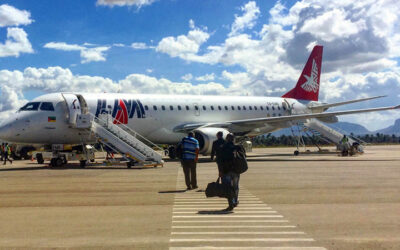
Mozambique resumes conducting passenger and cargo flights
Published in furtherafrica.com
On the 11th of September 2020, the Mozambican Civil Aviation Authority released an aeronautical information notice with the most recent decisions regarding the COVID-19 flight limitations.
With the entering into force of the Situation of Public Calamity, as well as the red alert status for all the Mozambican territory, the authorities decided to make some decisions in order to safeguard human lives and public health, assuring safety in the aviation sector.
The measures foreseen in this notice applies to all the air carriers, national and international, as well as to the airports of:
- Pemba and Mocimboa da Praia, Cabo Delgado Province;
- Lichinga, Niassa Province;
- Nampula and Nacala, Nampula Province;
- Quelimane, Zambézia Province;
- Chingodzi, Tete Province;
- Chimoio, Manica Province;
- Beira, Sofala Province;
- Inhambane and Vilanculos, Inhambane Province;
- Maputo, City of Maputo.
The flights from the following countries will be resumed, with the possibility of performing 2 flights per week:
- Portugal;
- Turkey;
- Qatar;
- Ethiopia;
- Kenya;
- South Africa.
Notwithstanding, passenger or cargo flights, State flights, technical landings, humanitarian flights, medical evacuation operations, repatriation flights, and United Nation flights are subject to previous clearance from the Civil Aviation Authority and the diplomatic missions.
The air carriers of countries not listed above may manifest the intention of flying to Mozambique through the proper diplomatic channels.
All passengers arriving from international flights are required to mandatory quarantine, as well as a negative PCR test in the 72 hours before the flight.
Article by Duarte Marques da Cruz
Duarte Marques da Cruz is partner of the Portuguese law firm MC&A, specialized in international business advisory, with a special focus in Lusophone markets. With extensive experience in the Energy sector (Renewables and Oil & Gas) and in International Taxation, he has supported international companies in major upstream, midstream transactions and projects, including in implementing, exploration and development programs. Duarte has also supported international clients in other areas of practice, namely, Mining, Transport & Logistics, Regulatory Compliance and Mergers & Acquisitions in Mozambique, Angola and Portugal.

Angola tax authority performs e-notifications to taxpayers
Published in furtherafrica.com
The Angolan General Tax Administration (“AGT”) issued, on September 16th 2020, a communicate according to which, from October 1st 2020 onwards, any notification to taxpayers regarding tax acts will be performed through the taxpayer online platform, available on AGT’s website, executing the Presidential Decree no. 232/19, which approved the Legal Regime of Tax Proceedings’ Electronic Communications.
This legal regime is compulsory for the below listed taxpayers:
- Taxpayers registered as major taxpayers;
- Taxpayers that have annual turnovers exceeding AOA 50,000,000.00– as per prior year corporate income tax return;
- Tax representatives of non-resident entities;
- Company groups subject to the special legal regime of group taxation.
Non-listed taxpayers may voluntarily join the legal regime by submitting a tax framework change return with AGT, providing valid and reliable email address and phone number.
The taxpayer platform will be, for the those who have (compulsory or voluntarily) joined it, the respective electronic tax domicile, becoming their tax residence.
Therefore, electronic communications and notifications have the same legal effects than those made by hard-copy letter to taxpayers’ registered office would have.
Article by Marco Correia Gadanha
Marco Correia Gadanha is a partner of the Portuguese law office MC&A. He is specialized in legal advice to international transactions. Marco has extensive experience of legal practice in Portugal and in the Portuguese-speaking African countries. Since 2008, he has practiced mainly in the areas of labor and litigation, assisting national and international clients in these and other matters, namely corporate law, especially in Portugal, Angola and Mozambique. He graduated at the University of Coimbra in 2005 and he holds post-graduations in Labor and Angolan Law.

Mozambique – New regulation on disasters risk reduction & assessment law
Published in furtherafrica.com
On September 1st 2020, the Decree 76/2020 was published, approving the new Regulation on the Disasters Risk Reduction and Assessment Law.
This new regulation applies to public and private entities that may have responsibilities in the Risk Reduction and Assessment prior, during, or after a disaster. The above mentioned disasters are: floods, droughts, plagues, cyclones, wildfires, epidemics, pandemics, land erosions, hydrocarbons spills, earthquakes, volcanic eruptions, tsunamis, nuclear issues, human originated disasters, and other phenoms that require the Emergency Situation of level 1 statement. The aforesaid entities have a duty of cooperation and collaboration with the local authorities during a disaster situation, including the possibility of a requisition.
Before the disaster, there is the possibility of being applied the State of Alert, divided into 3 stages:
- Yellow stage, with the purpose of monitoring and sensitize;
- Orange stage, for planning and mobilize;
- Red Stage, for activation and deployment of units.
During this period, some benefits may be granted including tax and customs facilities.
When a disaster occurs, there are two kinds of possible legal answers:
- The Situation of Public Calamity;
- The Situation of Emergency.
In both situations, the Government can pursue measures like the rationalization of resources and civil mobilization. The possible final stage is the mitigation, adaptation and resilience phase. This stage is divided into three risk assessment degrees depending on the impact of the disaster in the affected region:
- High;
- Medium;
- Low.
This moment encompasses the support of the local communities, as well as the monitoring of the impact and severity of the disaster.
Article by Duarte Marques da Cruz
Duarte Marques da Cruz is partner of the Portuguese law firm MC&A, specialized in international business advisory, with a special focus in Lusophone markets. With extensive experience in the Energy sector (Renewables and Oil & Gas) and in International Taxation, he has supported international companies in major upstream, midstream transactions and projects, including in implementing, exploration and development programs. Duarte has also supported international clients in other areas of practice, namely, Mining, Transport & Logistics, Regulatory Compliance and Mergers & Acquisitions in Mozambique, Angola and Portugal.

New measures related to COVID-19 issues in Angola
Published in furtherafrica.com
The Angolan Government approved on the last Tuesday (September 8, 2020) the Presidential Decree number 229/20, which updates the measures taken during the Public Calamity Situation. These new rules will be in force for the next 30 days;.
With the extension of the Public Calamity Situation, some changes occur to the rules previously imposed, namely:
- The sanitary fences in force will continue in force until October 8;
- It is allowed the return to the country of Angolan citizens and foreigners legally residing or with work visas, in addition to the entry of diplomats and official delegations. However, the requirement for a negative COVID-19 test, type RT-PCR, carried out up to 72 hours before embarkation both on entry and exit from Angolan territory is still in place;
- The gradual resumption of scheduled domestic and international flights is authorized as of mid-September;
- Home quarantine is mandatory for nationals, foreign residents, and members of the diplomatic corps accredited in Angola, coming from abroad;
- A minimum of 7 days remains mandatory for home quarantine, subject to a new COVID-19 test during that period;
- Documents issued by Angolan authorities with expired validity remain valid until December 31;
- The most vulnerable citizens to contagion are exempt from working in person, and must be submitted to the telework regime;
- It is allowed the return of the classes in person (including for foreign schools and centers of professional formation) from October, in a phased way and dependent on the biosafety conditions of the schools, also subject to random testing of managers, teachers, and employees;
- An extra hour is added to the operating permit of commercial establishments and restaurants, which may remain open until 8:00 p.m. and 10:00 p.m., respectively, with commercial establishments having 50% of the workforce in Luanda and 75% in the other provinces, and restaurants having 50% of their service capacity;
- Cultural and leisure establishments are allowed to operate, being mandatory the use of face mask and the observance of biosafety and physical distance rules, not exceeding 50% of their capacity;
- Religious services are allowed from September 19 on Saturday and Sunday (in Luanda) and up to four times a week in the provinces, always with the recommended biosecurity measures (use of masks, ventilation, and distance);
- Collective transports can work again without time limitation, from October 1, with the occupation of the vehicles being restricted to 75% of their capacity;”
Article by Marco Correia Gadanha
Marco Correia Gadanha is a partner of the Portuguese law office MC&A. He is specialized in legal advice to international transactions. Marco has extensive experience of legal practice in Portugal and in the Portuguese-speaking African countries. Since 2008, he has practiced mainly in the areas of labor and litigation, assisting national and international clients in these and other matters, namely corporate law, especially in Portugal, Angola and Mozambique. He graduated at the University of Coimbra in 2005 and he holds post-graduations in Labor and Angolan Law.