NEWS
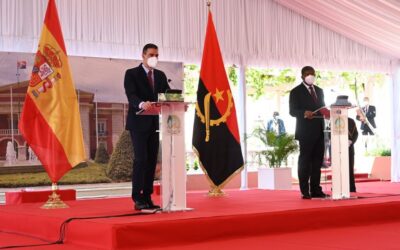
Spanish Prime Minister’s visit to Angola: a new chapter for Spanish-Angolan investments?
Published in furtherafrica.com
Earlier this month, Pedro Sanchez, the Spanish Prime Minister visited Luanda and participated in several meetings with the Angolan Authorities and economic players.
The visit of the Chief of the Spanish Executive to Angola had as major topic the business opportunities that may arise with the growth of the connection between the two countries. Other topics addressed during the visit were the defense and security areas, as well as the diplomatic cooperation.
It is important to underline that Angola was the first country of the African Tour of the Spanish Prime Minister, demonstrating the importance that Spain is giving to Angola and the will to stretching the bounds between both States.
Spanish Prime Minister Pedro Sánchez is received with honours by the President of the Republic of Angola, João Lourenço, on the terrace of the Presidential Palace. Photo La Moncloa via fotospublicas.com
Regarding economic diplomacy, several agreements and some memorandum of understanding were signed, being one of the more relevant in the air transport area. Additionally, agreements regarding agriculture, industry, and fishing were signed.
As a reminder of the Spanish-Angolan affairs in 2008, Spain conceded a credit line worth 600 million euros and in 2009 a new one worth 500 million euros to increase the exportation between the States. The business volume reached consequently around one billion in 2011 and 750 million in 2010.
Between 2015 to 2019, trade between the two countries was around 2 billion euros/year, demonstrating the strong bond that existed. With this visit Sanchez is trying to inaugurate a new chapter (in the sequence of the Focus Africa 2023 plan) in the economical diplomacy with Angola, trying to rebuild the strength of the last decade.

Marco Correia Gadanha is a partner of the Portuguese law office MC&A. He is specialized in legal advice to international transactions. Marco has extensive experience of legal practice in Portugal and in the Portuguese-speaking African countries. Since 2008, he has practiced mainly in the areas of labor and litigation, assisting national and international clients in these and other matters, namely corporate law, especially in Portugal, Angola and Mozambique. He graduated at the University of Coimbra in 2005 and he holds post-graduations in Labor and Angolan Law.

Angola to launch oil and gas licensing round on April 30
Published in furtherafrica.com
On April 7, Angola’s National Oil, Gas and Biofuels Agency announced that the next oil and gas bidding rounds for nine onshore blocks will be launched on April 30, when the terms of reference for the concession blocks will be formally disclosed.
This announcement is in compliance with the General Strategy for the Awarding of Petroleum Concessions 2019 – 2025, approved by Presidential Decree no. 52/19 and with the Agency’s announcement made in 31 December 2020.
Areas being offered include blocks in the Lower Congo and Kwanza basins: Blocks CON1, CON5 and CON6 in the Lower Congo Onshore Basin and Blocks KON5, KON6, KON8, KON9, KON17 and KON20 in the Kwanza Onshore Basin.
Regarding timelines, the Angolan government expects to receive the bids by June 9, 2021, open the proposals on June 10, 2021, evaluate the proposals by July 26, 2021, award the concession areas by August 10, 2021, negotiate the agreements by October 19, 2021, and sign the agreements on November 22, 2021.
The investors who want to participate in this bidding round will have to pay the entry fee (USD 1 million) and may submit their bids until 40 days after the launch.
Article by Duarte Marques da Cruz

Duarte Marques da Cruz is partner of the Portuguese law firm MC&A, specialized in international business advisory, with a special focus in Lusophone markets. With extensive experience in the Energy sector (Renewables and Oil & Gas) and in International Taxation, he has supported international companies in major upstream, midstream transactions and projects, including in implementing, exploration and development programs. Duarte has also supported international clients in other areas of practice, namely, Mining, Transport & Logistics, Regulatory Compliance and Mergers & Acquisitions in Mozambique, Angola and Portugal.

Angola: Fees to be charged by the Data Protection Agency
Published in furtherafrica.com
Recently, Angola approved the Presidential Decree no. 60/21, of 10 March, concerning the Regulation on Fees to be levied by the Data Protection Agency.
This regulation ensures the financing of the Data Protection Agency activity, created back in 2016, marking its proactivity as regulatory authority.
Indeed, the regulation defines the fees to be charged by the Angolan Data Protection Agency for the provision of filing services and granting authorizations to process personal data.
All public or private entities benefiting from the services provided and authorizations granted by the Data Protection Agency are deemed as taxable persons.
Direct public administration bodies and local authorities (i.e., “Autarquias Locais”) are only subject to the payment of half of the value of the fees referred in the Regulation.
Instalment payments are allowed, if and when justified and admissible and the fees amounts may be updated by joint executive decree.
The relation entered into force on 10 March 2021.
Article by Duarte Marques da Cruz
Duarte Marques da Cruz is partner of the Portuguese law firm MC&A, specialized in international business advisory, with a special focus in Lusophone markets. With extensive experience in the Energy sector (Renewables and Oil & Gas) and in International Taxation, he has supported international companies in major upstream, midstream transactions and projects, including in implementing, exploration and development programs. Duarte has also supported international clients in other areas of practice, namely, Mining, Transport & Logistics, Regulatory Compliance and Mergers & Acquisitions in Mozambique, Angola and Portugal.
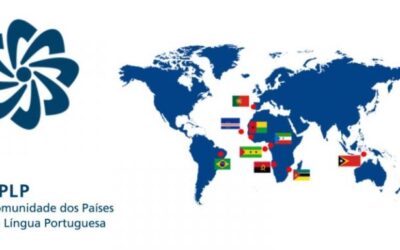
CPLP Council of Ministers approve free movement of persons in the Lusophone space
Published in furtherafrica.com
The Community of the Portuguese Language Countries’ Council of Ministers approved the proposal of free movement of persons within the Community
The Community of the Portuguese Language Countries (CPLP – Comunidade dos Paises de Lingua Portuguesa in Portuguese) approved a proposal in order to grant the free movement of persons in the Lusophone space.
The Council of Minister held this month, with the Presidency of Cape Verde, concurred with the Technical meetings of February and March enabling another step in the creation of an effective Lusophone space.
The next phase of the project will be the final approval by the CPLP’s Head of State and Government Meeting that will be held in July in Luanda. If the proposal is approved, the States will start the process of internal approval required to the free movement within the Lusophone space become a reality.
The CPLP is an international organization composed of 9 Member States from all over the globe, all with the Portuguese language as an official language.
Angola, Brazil, Cape Verde, Guinea-Bissau, Equatorial Guinea, Mozambique, Portugal, and East Timor are the members of the Community. Additionally, Andorra, Argentina, Chile, Czech Republic, France, Georgia, Hungary, Italy, Japan, Luxembourg, Mauritius, Namibia, Senegal, Slovakia, Serbia, Turkey, Uruguay, and United Kingdom are observers. Macau, Galicia, and Uruguay already demonstrated publicly the interest of being members of the Community, while countries like the United States demonstrated interest in being observers.
Created in 1996, the CPLP was created to be the key multilateral forum of discussion and cooperation between the Portuguese-speaking countries with the purpose of increasing the bounds between the Lusophony diplomacies and create a space of cooperation sedimented in common goals. Defence, Science, Technology, Culture, Sports, Justice, and Agriculture are among the key areas of cooperation pursued by CPLP.
Article by Marco Correia Gadanha
Marco Correia Gadanha is a partner of the Portuguese law office MC&A. He is specialized in legal advice to international transactions. Marco has extensive experience of legal practice in Portugal and in the Portuguese-speaking African countries. Since 2008, he has practiced mainly in the areas of labor and litigation, assisting national and international clients in these and other matters, namely corporate law, especially in Portugal, Angola and Mozambique. He graduated at the University of Coimbra in 2005 and he holds post-graduations in Labor and Angolan Law.

Review of Angola and Germany’s Agreement on the Promotion and Reciprocal Protection of Investments
Published in furtherafrica.com
Following the visit of the German Chancellor’s visit to the Republic of Angola last year and the consequent strengthening of bilateral relations since then, namely through the signing of cooperation agreements in areas such as transport and the mineral sectors, it is worth recalling the Agreement on the Promotion and Reciprocal Protection of Investments, which has become even more important with the strengthening of German-Angolan relations.
On October 30, 2003, the Federal Republic of Germany and the Republic of Angola signed an agreement for the reciprocal promotion and protection of investment (BIT). The same agreement entered into force on the 1st of March 2007, after completion of the formalities of each state related to the approval of international conventions, allowing the use of this important instrument to stimulate economic relations between the two countries.
This agreement applies to all investments made before or after its entry into force but does not cover disputes that arose before its entry into force.
Each of the Contracting Parties has undertaken to promote investments by investors of the other Party in its territory.
Such investments shall in all cases be claimed fair and equitable treatment, and the management, maintenance, use, enjoyment, or disposition of the investments of investors of the other Party shall not be hindered in any way by arbitrary or discriminatory measures.
Concretely, the treatment between the Parties shall not be less favourable than that accorded to investments of their own investors or of investors of other States.
Both Contracting Parties shall favourably examine the requests for entry and stay of persons of the other Party wishing to enter its territory for the purpose of making an investment. Furthermore, this favourable examination shall cover the applications for work permits, including salaried employees of one of the Contracting Parties intending to enter and stay in the territory of the other Contracting Party in connection with an investment for the purpose of carrying out a paid activity.
This Agreement also provides for no obligation to grant benefits to investors of the other Party in respect of their membership of or association with a customs or economic union, a common market, a free trade area, a similar international economic cooperation agreement, a double taxation agreement or other international agreements of a fiscal nature.
For the purposes of this Convention, less favourable treatment shall be deemed to be differential treatment in the case of limitations on the acquisition of raw and auxiliary materials, energy and fuel, as well as of means of production and operation of all kinds, differential treatment in the case of impediments to the sale of products within the country and abroad, and other measures having similar effects, but shall not apply to cases of measures taken for reasons of public safety or order, public health or morals.
Neither Contracting Party shall be obliged to extend to investors resident in the territory of the other Contracting Party those tax advantages, exemptions, and reductions which, according to tax legislation, are only granted to investors resident in its territory.
Enjoying full protection and full security, investments of investors of one of the Contracting Parties in the territory of the other Contracting Party shall not be directly or indirectly expropriated, nationalized or subjected to other measures with effects equivalent to expropriation or nationalization, except for reasons of public utility and upon compensation that shall correspond to the value that the investment had immediately before the date of public knowledge of the expropriation, nationalization.
Investors of a Contracting Party who suffer losses of investments in the territory of the other Contracting Party because of war or other armed conflicts, revolution, state of national emergency or insurrection, shall not receive a less favourable treatment in that Contracting Party as regards restitution, compensation, indemnity, or other consideration than that accorded to its own investors, such payments to be freely transferable.
After the fulfilment of the tax obligations, it shall ensure to the investors of the other Contracting Party the free transfer of the sums related to the investments, namely:
- Of the initial capital and the additional sums necessary for the maintenance or extension of the investment;
- Current income;
- Loan repayments;
- The proceeds resulting from the total or partial liquidation or disposal of the investment;
- Compensation.
Disputes arising between the Contracting Parties concerning the interpretation or application of this Agreement shall be settled as far as possible by the Governments of the two Contracting Parties. If within six months the dispute cannot be settled in this way, it shall be submitted to an arbitration tribunal at the request of either of the Contracting Parties.
Article by Marco Correia Gadanha
Marco Correia Gadanha is a partner of the Portuguese law office MC&A. He is specialized in legal advice to international transactions. Marco has extensive experience of legal practice in Portugal and in the Portuguese-speaking African countries. Since 2008, he has practiced mainly in the areas of labor and litigation, assisting national and international clients in these and other matters, namely corporate law, especially in Portugal, Angola and Mozambique. He graduated at the University of Coimbra in 2005 and he holds post-graduations in Labor and Angolan Law.